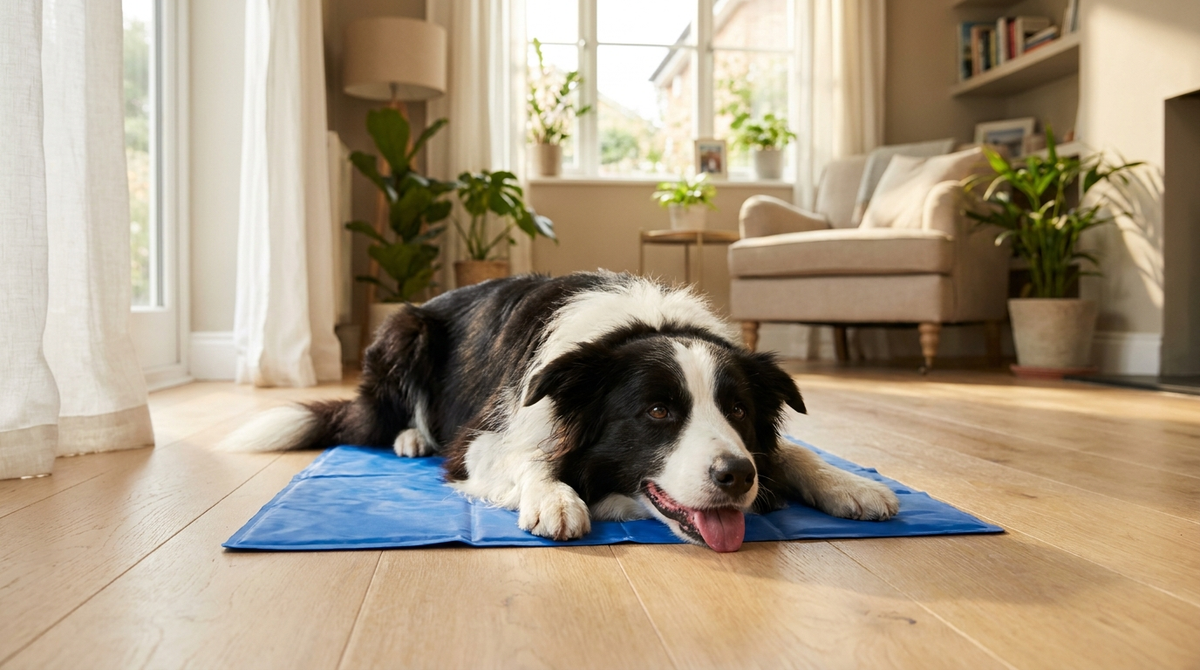
British summers used to be a punchline; now 30°C-plus weeks arrive most years, and our dogs feel it far more than we do. Dogs can't sweat the way we can — they cool down mainly by panting — which means heat builds up fast, especially in thick-coated and flat-faced breeds. Here's how to keep your dog safe and comfortable when the temperature climbs.
First: know the warning signs of overheating
Heatstroke in dogs is an emergency. Call your vet immediately if you see:
- Heavy, frantic panting that doesn't settle
- Drooling more than usual, or thick, sticky saliva
- Bright red gums or tongue
- Wobbliness, confusion or collapse
- Vomiting or diarrhoea in the heat
Flat-faced breeds (French Bulldogs, Pugs, Bulldogs), overweight dogs, seniors and puppies are all at higher risk and need extra caution.
1. Shift walks to early morning and late evening
The classic rule holds: if the pavement is too hot for the back of your hand for seven seconds, it's too hot for paws. In a heatwave, that often means walking before 8am and after 8pm — and it's completely fine to skip a walk on the worst days. A missed walk never hurt a dog; a walk at 2pm in 32°C heat can.
2. Give them a cool surface to lie on
Dogs instinctively seek cold floors in summer — you'll find them starfished on the bathroom tiles. A pet cooling mat gives them that relief anywhere in the house. Pressure-activated gel mats need no fridge, no water and no electricity: your dog lies down, the gel draws heat away from their body, and it recharges itself when they hop off. Put it where your dog already likes to rest, and let them choose to use it — most take to it within a day or two.
3. Keep water bowls everywhere (and add ice)
One bowl in the kitchen isn't enough in a heatwave. Put bowls in every room your dog uses, plus the garden, and drop in a few ice cubes. Some dogs drink noticeably more from moving or fresh-tasting water, so refresh bowls a couple of times a day.
4. Never leave a dog in a car. Not for a minute.
On a 25°C day, a parked car can pass 40°C inside within half an hour — windows cracked or not. Dogs die in hot cars in the UK every single summer. If you can't take them in with you, leave them at home.
5. Make frozen treats
Stuff a lick mat or hollow toy with wet food, plain yoghurt or mashed banana and freeze it. It cools your dog from the inside and keeps them occupied during the hottest hours. Slow feeders work brilliantly for this — our anti-gulping maze bowl doubles as a great frozen-meal dish.
6. Try a paddling pool or damp towel
A cheap paddling pool in the shade is summer luxury for most dogs. No pool? Lay a damp (not soaking) towel on the floor to lie on, or gently wet their paws, belly and chest — the areas where dogs lose heat most effectively.
7. Brush out the winter undercoat
Double-coated breeds trap a surprising amount of dead undercoat, which works like insulation in exactly the wrong way. A good deshedding session — a grooming glove makes it easy and most dogs enjoy it — helps air circulate against the skin. Don't shave a double-coated dog though: the coat also protects against sunburn.
8. Close curtains, open a breeze
Treat your house like a Mediterranean villa: curtains and blinds closed on the sunny side during the day, windows open early morning and evening, a fan moving air at dog height. Your dog will find the coolest spot — make sure they have access to it.
9. Watch the humidity, not just the temperature
Panting works by evaporation, and humid air makes it far less effective. A muggy 26°C day can be harder on your dog than a dry 30°C one. On humid days, dial everything down: shorter garden time, more rest, more water.
The bottom line
Keeping a dog cool isn't complicated: shade, water, cool surfaces, sensible timing, and never the car. Set your dog up with a cooling mat in their favourite spot, shift the routine around the sun, and you'll both get through the heatwave comfortably.