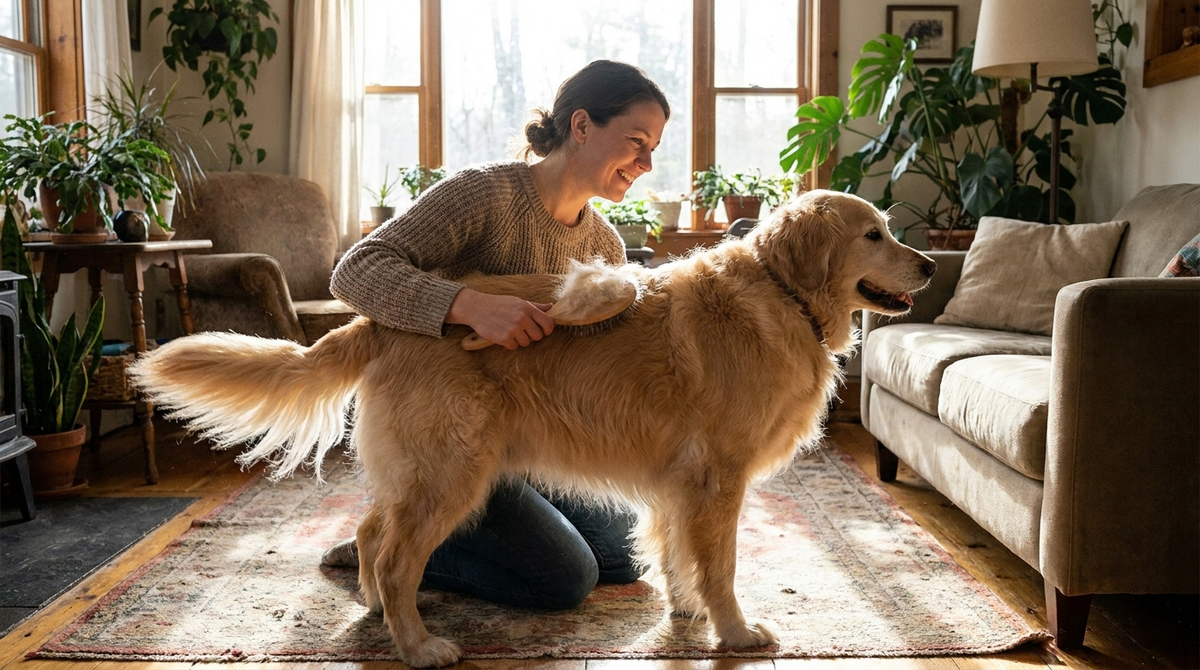
Professional grooming in the UK now runs anywhere from £30 to £70-plus a session, and for many breeds that's needed every 6–8 weeks. The good news: most of the routine — brushing, deshedding, tidy-up trims and nail care — is genuinely doable at home with a small set of tools and a bit of patience. Here's how to start.
Why home grooming is worth learning
- It saves serious money — even halving your salon visits pays for your kit within months.
- Little and often beats rare and dramatic. Ten minutes of brushing twice a week prevents the matting that turns into a stressful full shave-down.
- You'll spot problems early — lumps, ticks, grass seeds, sore skin and ear issues all get found by hands-on owners first.
- It builds trust. A dog that's handled regularly is calmer at the vet, too.
The essential toolkit
You don't need a salon's worth of equipment. Four things cover 90% of home grooming:
- A brush suited to the coat. A self-cleaning slicker brush handles most coats and makes the fur-disposal part painless.
- A deshedding tool or glove. For heavy shedders, grooming gloves are the gentlest entry point — most dogs think they're just being stroked.
- Clippers or a trimmer for tidy-ups around paws, sanitary areas and faces. An all-in-one option like our 4-in-1 grooming trimmer and nail kit covers trimming and nails in one box.
- Nail care. Clippers work but are easy to overdo; an electric nail grinder takes nails down gradually, which is much harder to get wrong.
A simple routine that works
- Start calm. After a walk, not before one. Let your dog sniff the tools, reward, then begin.
- Brush with the coat direction first, nose to tail, then work on any tangles with short gentle strokes. Never yank a mat — work it from the ends, or trim it out.
- Deshed (double-coated breeds) once the top coat is smooth.
- Tidy trim around paw pads, hygiene areas and eyes if needed. Trimmer flat to the skin, slow movements, no pressure.
- Nails last, when your dog is most settled. A few seconds per nail is plenty.
- End on a win — treat, praise, done. Keep sessions under 20 minutes at first.
How often, by coat type
- Short smooth coats (Labs, Staffies, Beagles): brush weekly, bathe every couple of months.
- Double coats (Huskies, German Shepherds, Corgis): brush 2–3 times a week, daily during spring and autumn coat blow.
- Curly and wool coats (Poodles, Doodles): brush every other day — these coats mat fast — with a professional cut every 6–8 weeks.
- Long silky coats (Yorkies, Shih Tzus, Spaniels): daily quick brush, focusing behind ears, armpits and trousers where mats start.
Nail trimming without the drama
Most dogs hate nail day because it only happens when nails are already too long. Flip that: touch and handle paws daily, run the grinder for a second without trimming, reward heavily, and build up over a week or two. If you can hear nails clicking on the kitchen floor, they're due. With a grinder, take a little off every week rather than a lot off every month — the quick (the sensitive part inside the nail) actually recedes with regular short trims.
When to still use a professional
Home grooming and professional grooming aren't rivals. Severe matting, breed-specific styling, anxious dogs that need experienced handling, and anal gland issues are all groomer or vet territory. Do the maintenance at home, and your groomer visits become quicker, cheaper and far more pleasant for your dog.
Start this weekend
Pick one thing — a proper brush-through is the best first session — and keep it short and positive. Your dog gets a healthier coat, you get a calmer companion and a lighter grooming bill, and everyone wins. Browse our grooming range, including the 4-in-1 trimmer kit and deshedding gloves, to build your starter kit.